

The first thing photographers notice in the snow isn’t the cold. It is the silence of contrast. White does not arrive empty. It arrives loaded. With light and consequence. Snow removes the excess and leaves only what matters, which is why photographers keep returning to it when they want to see clearly again.
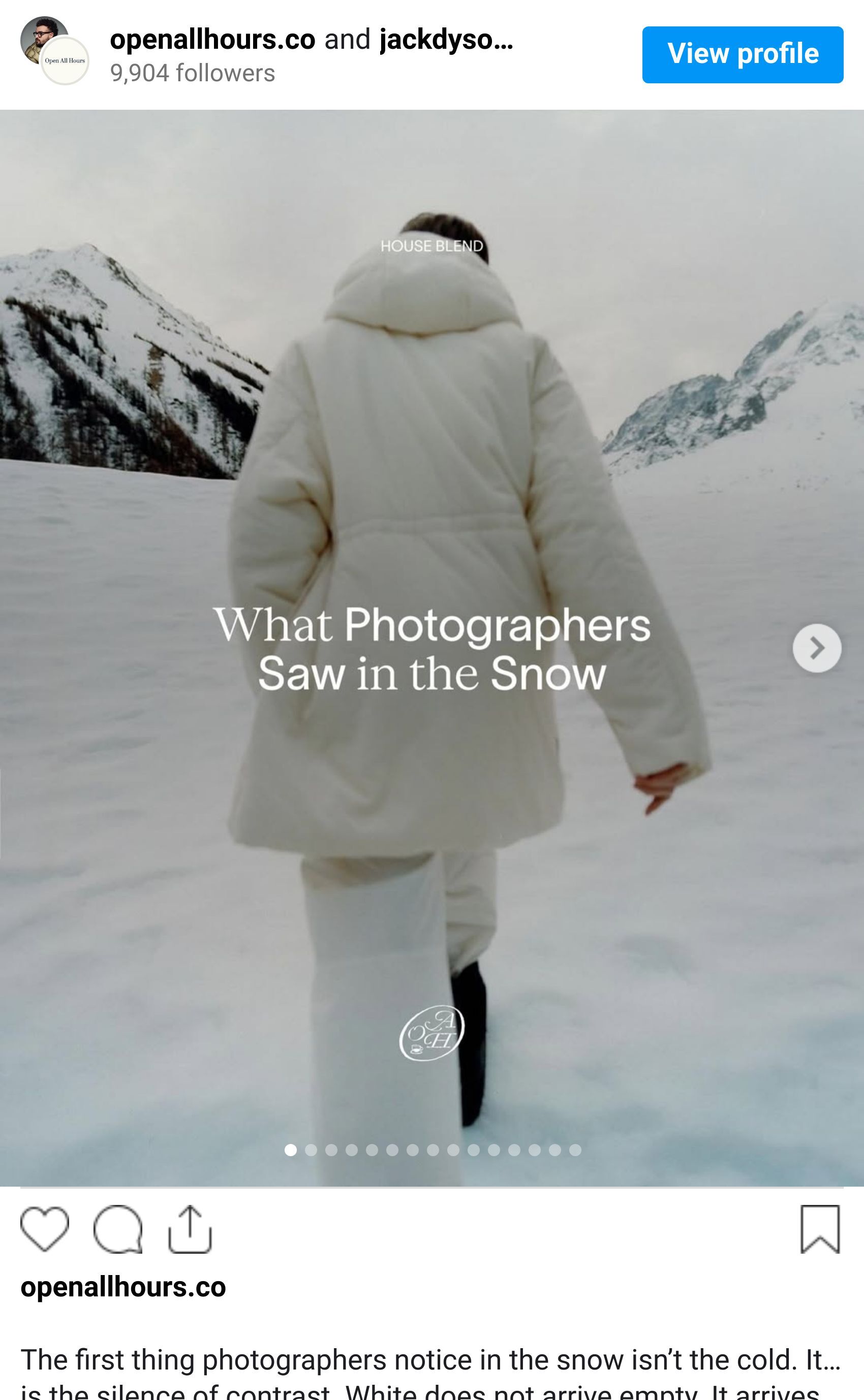
Alpine ridge-lines. Temporary structures swallowed by white. Figures reduced to silhouettes and gestures. Snow has a way of stripping a scene back to its bones, and photographers understand that better than anyone. It turns the world into a blank page and asks you to be precise.


In the snow, colour becomes a decision, not a default. Reds feel louder. Blacks feel sharper. Skin tones feel warmer. Every shade carries more weight because there is nowhere for it to hide. Photographers lean into this by letting colour work harder or by removing it entirely. Monochrome in snow is not nostalgic. It is architectural. Form, shadow, and movement suddenly do the talking.
Light behaves differently here too. It bounces instead of settles. It fills gaps. It softens edges without blurring intent. Snow creates a natural reflector that makes even overcast days feel generous. For photographers, this is a gift and a challenge. Exposure becomes a negotiation. Highlights demand respect. Underexposure becomes an aesthetic choice rather than a mistake.
What stands out most is how snow changes scale. A person becomes smaller. A gesture becomes clearer. Space stretches. Photographers use this to tell quieter stories. A lone figure walking across a slope says more than a crowded frame ever could. It rewards waiting and it teaches you when not to shoot.


There is also a ritualistic quality to working in snow. Gloves off. Camera steady. Breath controlled. The act of photographing becomes slower, more intentional. You cannot rush a frame when your fingers are numb and your batteries are fading. Every image costs something, and that cost sharpens taste.
Fashion photographers understand this especially well. Snow removes the noise of context and lets clothing speak in structure and movement. Fabric reacts differently. Silhouettes stretch and collapse. Campaigns shot in snow rarely rely on spectacle alone. They rely on composition and confidence. The environment refuses to carry the concept for you.
For documentary photographers, snow becomes a truth-teller. It reveals paths taken. It shows where someone has been and where they are heading. Footprints become narrative. Absence becomes information. There’s honesty in that. Snow records without opinion.

What photographers see in the snow is not a trend or a backdrop. It’s discipline and editing in its purest form. A reminder that when everything is stripped back, taste becomes visible.
Like a well-pulled espresso, snow does not forgive shortcuts. You either respect it or it exposes you.
And that is exactly why photographers keep returning to it.
Shot of the good stuff.
